



 6 Min
In OTC

Follow this topic

Bookmark

Record learning outcomes
Vaccines have been more prominent in the public’s consciousness since the pandemic, and subsequent public health campaigns have promoted different kinds of vaccinations to a variety of population groups. But what exactly are vaccines, how do they work, and what advice can pharmacy teams give customers about them?
What is a vaccine?
A vaccine is a type of medicine that trains the immune system to fight a disease it has not encountered before, in order to prevent illness. To understand how vaccines do this, it helps to look at how the immune system works…
A vast number of bacteria and viruses live naturally in our bodies. Most are harmless, but some can make us ill. These disease-causing microorganisms are known as pathogens.
When pathogens get into the body, the immune system quickly recognises structures called antigens on their surfaces. This triggers a complex chain of events involving many types of white blood cells, one of which produces antibodies that stick to the invading pathogens and either kill or disable them.
The catch is that antibodies only work if they are exactly the right shape, much like a key fitting a lock. “Our bodies have a library of billions of white blood cells, each of which can make just one shape of antibody, but only a few of these antibodies will match the invading bacteria,” explains the University of Oxford’s Vaccine Knowledge Project (VKP).
Once the right cells are activated, they divide rapidly and become a production line, churning out antibodies until the infection is cleared and the person recovers. Antibody levels often decrease over time, but immune memory can persist via white blood cells known as ‘memory B’ cells and other immune mechanisms. This means that if the same pathogens invade the body again, the immune system will respond quickly to fend off illness.
Vaccines harness the same process. Some contain weakened or dead bacteria or viruses, or even just a few of their surface molecules, which is enough to convince the immune system that a real invader has got in. “The same process takes place as when real bacteria or viruses invade our bodies, except you don’t get ill,” explains the VKP. If the body later meets the real infection, the immune system may recognise and respond to the pathogen more quickly, reducing the risk of illness or severe disease.
Vaccination also offers protection beyond the person receiving the jab. When a high proportion of the population is vaccinated, infectious diseases struggle to spread because there are few people left who can catch them. Transmission becomes less likely, helping to protect people who are not vaccinated or who may not respond adequately to vaccination. This is known as ‘herd immunity’, ‘community immunity’ or ‘herd protection’, and it shields vulnerable people such as newborn babies, older people and those too unwell to be vaccinated themselves from becoming ill.
However, herd immunity has its limits. Tetanus, for example, is caught from bacteria in the environment rather than from other people, so the vaccination status of those around us makes no difference.

Different types of vaccines
Vaccines can be divided into a number of types, but they ultimately work on the same principle.
Live attenuated vaccines contain whole bacteria or viruses that have been weakened (attenuated) so that they create a protective immune response but do not cause disease in healthy people. These may not be suitable for people whose immune system doesn’t work properly due to drug treatment or underlying illness.
The live attenuated vaccines used in the current UK vaccination schedule are for rotavirus, MMRV (measles, mumps, rubella and varicella, which officially replaced the standard MMR vaccine in the routine childhood immunisation schedule in January); nasal flu; the BCG vaccine against TB, and live travel vaccines for yellow fever.
Inactivated vaccines contain whole bacteria or viruses that have been killed or altered so that they cannot replicate. Because inactivated vaccines do not contain live bacteria or viruses, they cannot cause the diseases against which they protect, even in people with severely weakened immune systems. However, they don’t always create such a strong or long-lasting immune response as live attenuated vaccines. The inactivated vaccines in the UK schedule are the inactivated polio vaccine; some ‘split virion’ flu vaccines; the hepatitis A vaccine (special groups only); and travel vaccines against rabies and Japanese encephalitis.
Recombinant protein vaccines are made using bacteria or yeast cells. A small piece of DNA is taken from the virus or bacteria we want to protect against and inserted into the manufacturing cells. The recombinant vaccines used in the UK are for hepatitis B, HPV, and meningitis B. The Shingrix shingles vaccine is a non-live, recombinant subunit vaccine.
There are also conjugate vaccines. ‘Conjugate’ means ‘connected’ or ‘joined’. With some bacteria, to get protection from a vaccine, the immune system has to be trained to respond to polysaccharides (complex sugars on the surface of bacteria) rather than proteins. In most conjugate vaccines, the polysaccharide is attached to diphtheria or tetanus toxoid protein. The immune system easily recognises these proteins, and this helps to generate a stronger immune response to the polysaccharide. Conjugate vaccines used in the UK include the PCV (children’s pneumococcal vaccine).
“Vaccination offers protection beyond the person receiving the jab”
The 6-in1 childhood vaccine
The 6-in-1 vaccine is now given to babies in four doses when they are eight, 12 and 16 weeks and 18 months old to protect against diphtheria, tetanus, whooping cough (pertussis), polio, Hib disease (Haemophilus influenzae type b) and hepatitis B. The repeated doses are needed to give a good immune response. UK 6-in-1 vaccines do not contain any live bacteria or viruses, and cannot cause any of the diseases they protect against.
Patient-facing skills for the pharmacy team
In addition to delivering vaccination services, pharmacy teams are well-placed to help address vaccine hesitancy and misinformation, explain side effects clearly, and communicate the risks and benefits of vaccinations to help customers make informed choices through shared decision making.
“Good communication and empathy are really important,” says Mital Thakrar, head of private services for Well. “Pharmacy teams need to recognise when a patient is hesitant or anxious, listen to their concerns and give clear information about the risks and benefits of vaccination.”
Pharmacy teams should also explain possible side effects clearly and help patients understand how these can be managed. “This is particularly important when supporting parents who may be anxious about childhood vaccinations, with a focus on listening, providing clear information and helping people make informed decisions about their health,” Mital explains.
Reshma Malde, pharmacist at John Bell & Croyden in London, has additional advice. “Pharmacy teams should explain information in plain language,” she says. “Put risks and benefits into meaningful context and check understanding. If someone remains unsure, giving them the opportunity to ask further questions or speak to the pharmacist or vaccinator can help them reach an informed decision. The aim should be to create an environment in which patients feel listened to and supported.”

Pharmacy vaccination services
Access to vaccination services has increased in recent years, with community pharmacies in England delivering more than ever before.
Since September 2015, community pharmacies have delivered a nationally commissioned flu vaccination service, and stepped up during the Covid-19 pandemic to vaccinate communities and deliver seasonal vaccinations under a national advanced service.
In 2025, the NHS childhood flu vaccination service was piloted as a community pharmacy advanced service, and this has been extended and expanded for the 2026/27 flu immunisation programme.
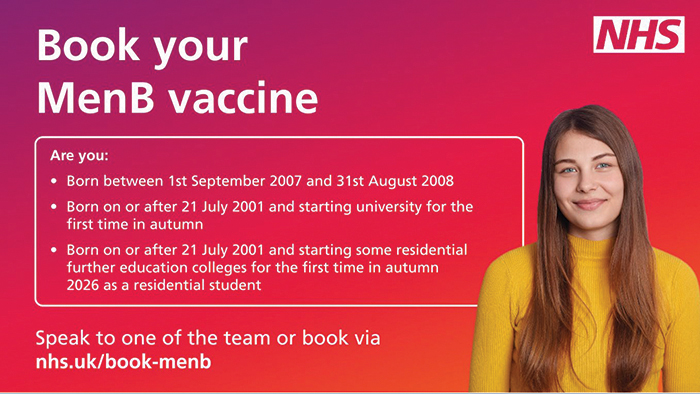
The national enhanced service for respiratory syncytial virus (RSV) and pertussis vaccinations has highlighted how pharmacies are key in tackling emerging health challenges. This includes offering a one-off time-limited MenB vaccination as a community pharmacy advanced service to protect eligible students before they start university or higher education.
Some community pharmacies may also deliver locally commissioned services as well as private vaccination services, such as travel clinics.
Recent legislative changes now allow pharmacy technicians to assess, supply and administer certain vaccines under a Patient Group Direction (PGD) or Vaccine Group Direction (VGD).
“A successful vaccination service starts with a whole-team approach”
Keys to success
So what makes a successful pharmacy vaccination service? Mital Thakrar, head of private services for Well, says there are several key things pharmacies need to have in place, including the appropriate Patient Group Directions (PGDs), a suitable consultation room, clear SOPs and consent processes, a booking system, an anaphylaxis kit, and arrangements for clinical waste disposal.
Training is essential, and Mital says this should cover injection technique and vaccine administration, basic life support and emergency response, safeguarding, vaccine storage, and consultation skills.
Working with GP practices is also key. “Rather than competing, pharmacies and GP practices should work together with the same goal – supporting the patient,” says Mital. “Regular communication and good local relationships can help improve services for the community while reducing pressure on GP practices and the wider NHS.”
Collaboration doesn’t only happen outside the pharmacy. “A successful vaccination service starts with a whole team approach since vaccination services work best when the whole pharmacy team understands the patient journey and their individual role within it,” says Reshma Malde, pharmacist at John Bell & Croyden in London. “Support staff can play an important role in identifying eligible patients, explaining how the service works, answering appropriate non-clinical questions, supporting patients with appointments where needed, and recognising when a question or concern needs to be referred to the vaccinator or another healthcare professional.”
The key message is that vaccination really is a team service. “Not everyone needs to be the person administering the vaccine to make a difference,” says Reshma. “From recognising eligible patients and helping people navigate the service to identifying misinformation and knowing when to refer a concern, every member of the pharmacy team has a role in making vaccination accessible, safe and patient-centred.”
Case study: A first for preschool flu vaccinations
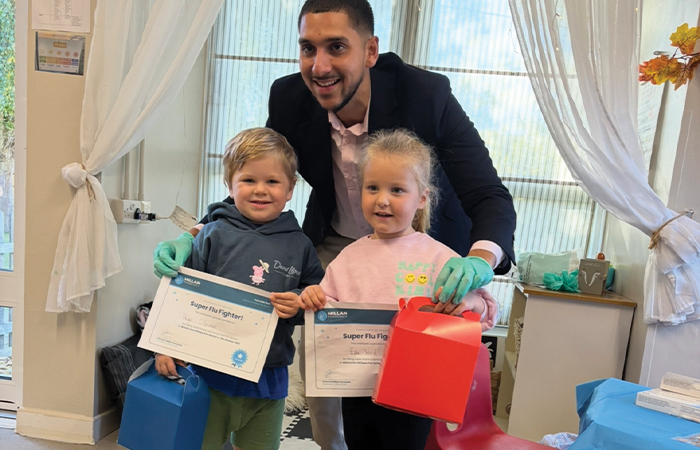
When Millan Pharmacy in Portsmouth became the first community pharmacy in the South East to be approved to deliver an NHS flu vaccination service off-site at a preschool, the children at Wind in the Willows Preschool had a special day when they became Super Flu Fighters.
Superintendent pharmacist Francisco Millan-Fernandez led the organisation of the clinic, working closely with NHS England and the preschool, as part of the NHS’s flu vaccination programme to deliver the nasal spray vaccine to the youngsters.
Francisco is clear that his whole pharmacy team has a part to play in delivering vaccines. “Our pharmacy support staff play a vital role in promoting vaccination services, engaging with the local community and raising awareness of the importance of immunisation,” he says, “so it’s essential that they understand NHS eligibility criteria, can answer general questions and know when and where to signpost patients.
“Our staff are increasingly involved in vaccine procurement, regular stock checks, monitoring supplies and coordinating deliveries to ensure vaccines arrive when needed, so understanding cold chain requirements, correct storage and the legal responsibilities surrounding vaccines is equally important.”
On this occasion, Francisco administered the nasal spray vaccines himself, but he says: “With the appropriate training and authorisation, eligible pharmacy support staff can now take a more active role in administering certain vaccinations themselves, which is a really exciting development for the profession.”
Feedback from parents of the children at the nursery was “extremely positive”– and the convenience of having their children vaccinated in a familiar environment was a particular plus. “For me, the most rewarding part was bringing healthcare directly into the community, improving public understanding of vaccinations and showing what community pharmacy can achieve when we take the initiative,” says Francisco.
For the Millan Pharmacy team, the highlight was seeing the pharmacy take on a new opportunity to do something different.
“It showed them that community pharmacy isn’t just about dispensing prescriptions, and that they have a real part to play in improving public health,” Francisco says. “Whether that’s educating patients, promoting vaccinations or helping make these services accessible to more people.”

Share:


In OTC